On a summer morning in 216 BCE, on the open plain beside the river Aufidus in southern Italy, the largest army Rome had ever raised met Hannibal's Carthaginians. The Romans had about 86,000 men against Hannibal's 50,000, and they planned to smash through his centre by sheer weight. Hannibal let them try. He pushed his weakest infantry forward in a curve and let it give ground slowly, drawing the Romans deeper and deeper into a pocket. Meanwhile his heavy cavalry routed the Roman horse by the river, rode behind the Roman army to break the allied horse on the far wing, and returned to strike the Romans in the rear. His veteran African infantry, held back on both ends of his line, turned inward on the Roman flanks. By evening the Roman army was surrounded and too tightly packed to fight; tens of thousands were killed. Cannae was Rome's worst defeat, yet Rome refused to make peace and went on to win the war. Hannibal's plan, a double envelopment in which a smaller army surrounds a larger one, has been studied by commanders ever since.
1. Summary card
| Field | Value |
|---|---|
| Name (and other names) | Battle of Cannae |
| Date(s) | 2 August 216 BCE (Roman calendar; the solar date may be June or July) |
| Period / Region code | P03 / ME |
| Location (modern place, country) | Near Canne della Battaglia, on the Ofanto (ancient Aufidus) river, Apulia, Italy |
| Coordinates (lat, long) | 41.306, 16.153 (the hill of Cannae; the exact field is disputed, see section 12) |
| War / campaign | Second Punic War; Hannibal's invasion of Italy, third year |
| Type | land |
| Result | Decisive Carthaginian victory; most of the Roman army destroyed |
| Technology | Not decisive: both sides fought with similar weapons (Roman javelins and short swords; many Africans in captured Roman armour). The battle was won by tactics, not technology. |
| Why it matters (one sentence) | The classic double envelopment: a smaller army surrounded and destroyed a larger one on open ground, and commanders have studied it ever since. |
| Record status | draft |
2. Leaders
| Side | Name | Role in battle | Background and reputation before | Known intent / plan | How they performed |
|---|---|---|---|---|---|
| Carthage | Hannibal Barca | Commander; with his brother Mago in the centre | Aged about 31. Had crossed the Alps and beaten Rome at the Trebia (218) and Lake Trasimene (217). | Draw the Romans into the centre, then close on both flanks and the rear. | Near flawless. Stood in the most dangerous place, the centre, to hold it together while it gave ground. |
| Carthage | Hasdrubal | Heavy Spanish and Gallic cavalry, left wing by the river | Hannibal's senior cavalry officer (not his brother of the same name). | Break the Roman cavalry quickly, then act as the reserve. | Decisive. Routed the Roman horse, rode round the rear to break the allied horse, then attacked the Roman infantry from behind. |
| Carthage | Maharbal (Livy) or Hanno (Polybius) | Numidian light cavalry, right wing | Veteran cavalry leader. | Pin the allied cavalry until Hasdrubal arrived. | Did its job; pursued the allied cavalry once it broke. |
| Rome | Gaius Terentius Varro | Consul in command that day; allied cavalry, left wing | A new man (no consular ancestors), popular with the Assembly; blamed by the aristocratic sources. | Crush the enemy centre by weight and depth. | Held a sound, if rigid, plan; escaped with the cavalry. Rome thanked him for "not despairing of the Republic" (Livy 22.61). |
| Rome | Lucius Aemilius Paullus | Consul; Roman citizen cavalry, right wing by the river | Experienced; had been consul in 219. Our main source, Polybius, was a client of his family. | Reportedly wanted to avoid battle on open ground. | Wounded early by a sling stone (Livy 22.49; Polybius does not mention it); fought on with the infantry and was killed. |
| Rome | Gnaeus Servilius Geminus and Marcus Atilius Regulus | Ex-consuls; commanded the infantry centre (Polybius 3.114.6; Livy 22.45 names Servilius only) | Consuls of 217. | Push through the centre. | Servilius killed. Livy 22.40 says Atilius was excused for age; the sources disagree. |
3. Forces
| Carthage (Hannibal) | Rome and allies (Varro, Paullus) | |
|---|---|---|
| Estimated strength (low–high, cite) | About 40,000 infantry and 10,000 cavalry (Polybius 3.114) | About 80,000 infantry and 6,000 cavalry (Polybius 3.113); 10,000 left to guard the camp. Some modern historians argue for 50,000–55,000 in total. |
| Composition | Libyan (African) heavy infantry; Spanish and Gallic infantry; Balearic slingers; Spanish/Gallic heavy cavalry; Numidian light cavalry | Eight Roman legions and as many allied units; light infantry (velites); Roman and allied cavalry |
| Key weapons / technology | African infantry in Roman armour taken at Trasimene; Spanish short swords; Gallic long swords; Numidians with javelins riding without bridles | Heavy javelins (pila) and short swords; large shields; the maniple system, here packed unusually deep |
| Morale, training, supply | Veterans of two victories, loyal to Hannibal; short of supply, having just taken the Roman depot at Cannae | Many new recruits; confident because of their numbers; under political pressure to win |
| Casualties (low–high, cite) | About 5,700 (Polybius) to 8,000 (Livy) killed, mostly Gauls | Polybius: about 70,000 killed. Livy: 48,200 killed and about 19,000 captured. |
4. Strategic context
- Carthage's aim. Hannibal could not besiege Rome, so he needed to break its alliance system in Italy. He had to win victories big enough that the Italian allies would change sides.
- Rome's aim. After Trasimene, the dictator Fabius had avoided battle (the "Fabian strategy"). By 216 Rome was tired of Hannibal ravaging Italy. It raised the largest army in its history, and the consuls were sent to fight.
- Why here. Hannibal took the supply depot at Cannae and camped on open, level ground that suited his cavalry. The consuls followed him and, because they alternated command day by day, argued over whether to fight. On Varro's day they offered battle.
5. Terrain and weather
- Ground. A flat, open plain beside the Aufidus river. The river protected one flank of each army. The plain was too narrow for the Romans to use their full width, so they deepened their lines instead.
- Weather. High summer, hot and dry. Livy says a south-east wind (the Volturnus) blew dust (Livy 22.46) into the Romans' faces. Hannibal had placed his army with its back to the wind.
- How terrain shaped the battle. The river on one side and the narrow plain meant the wings were short and the cavalry fights were close to the infantry, so the battle stayed tight. The Romans' depth gave them weight but no room to turn.
6. Maps
Maps are drawn in the style of an old campaign atlas (Q19): hatching, serif lettering, double frame, and readable in grayscale. Legend: Carthage with dense diagonal hatching, Rome with light horizontal hatching; a diagonal bar marks cavalry; solid arrows for Carthaginian moves, outlined arrows for Roman moves; north up.
| # | Map | Shows | File | Drawn from | Confidence |
|---|---|---|---|---|---|
| 1 | Campaign | Hannibal's route 218–216: Alps, Trebia, Trasimene, Cannae | 01-campaign.svg | Lazenby; Goldsworthy | high |
| 2 | Terrain | Aufidus, the hill of Cannae, the plain, both camps | 02-terrain.svg | Goldsworthy; Daly | medium (the exact field is disputed) |
| 3 | Initial deployment | Both lines, the Carthaginian crescent, cavalry on the wings | 03-deployment.svg | Polybius 3.113–114 | high for the order, low for exact widths |
| 4 | Phase 2 | Hasdrubal routs the Roman cavalry | 04-phase2.svg | Polybius | high |
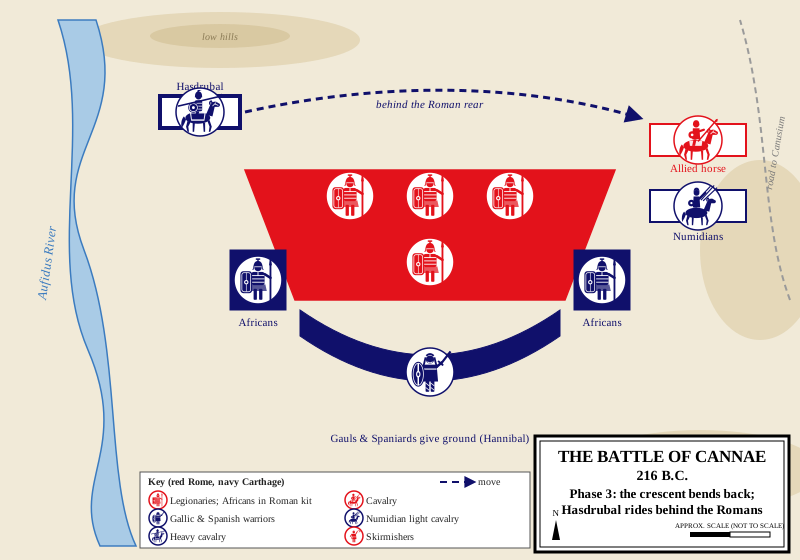
| 5 | Phase 3 | The crescent bends back; the Africans stand ready | 05-phase3.svg | Polybius | high |
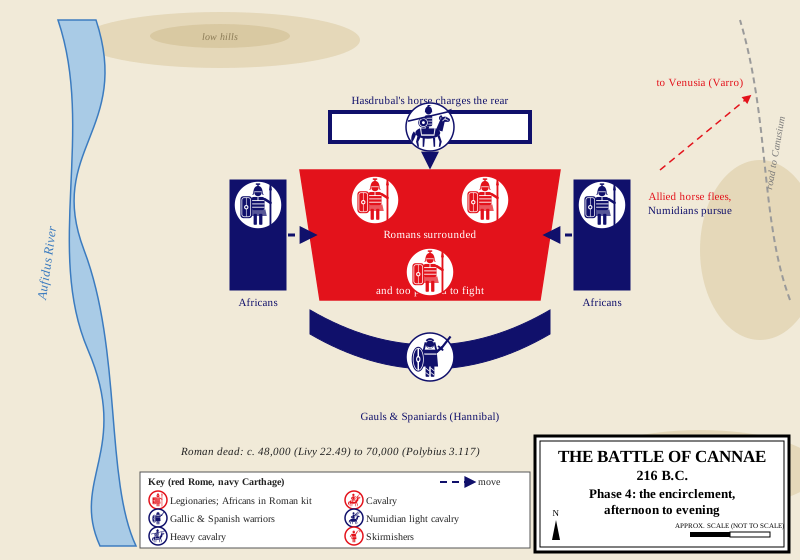
| 6 | Phase 4 / final | Encirclement complete | 06-final.svg | Polybius; Livy | high |
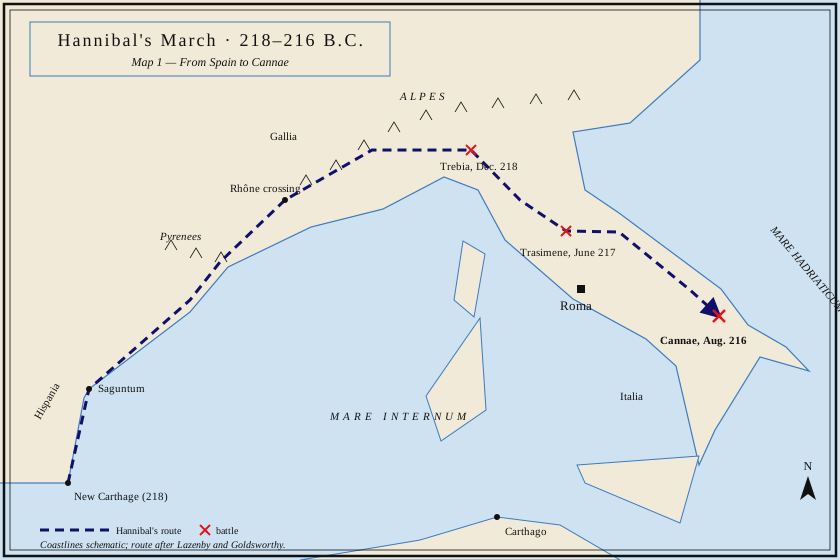
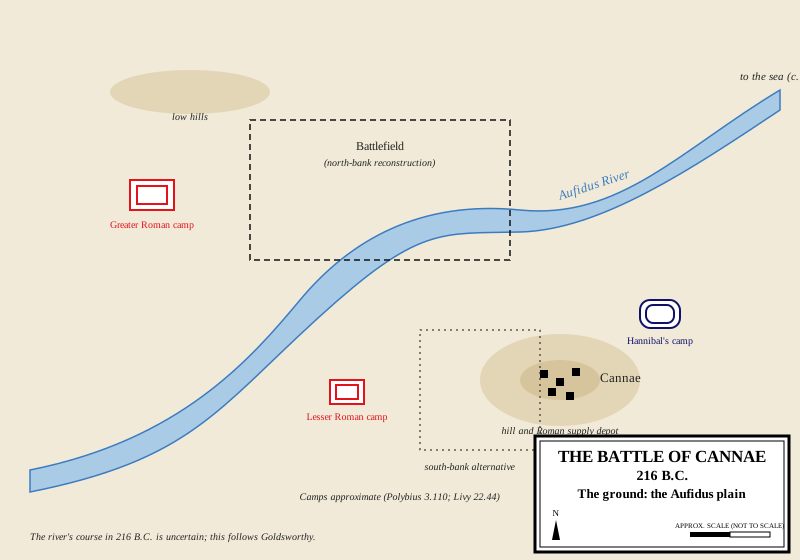
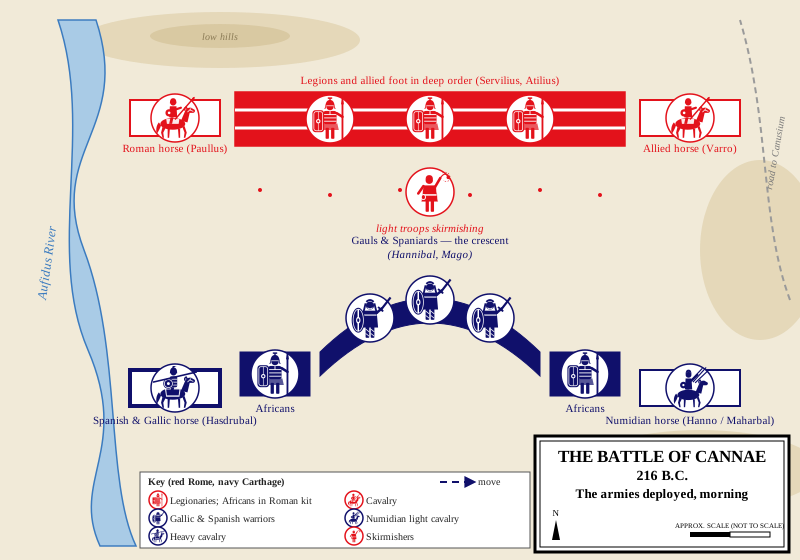
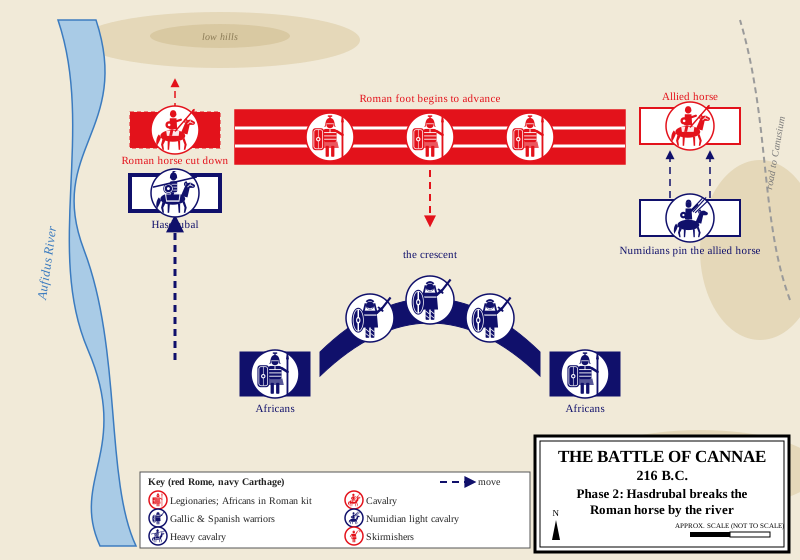
7. Course of the battle (phases)
| Phase | Time | What happened | Map # |
|---|---|---|---|
| 1 | Morning | Light troops skirmish between the lines; Balearic slingers wound Paullus (Livy 22.49). | 3 |
| 2 | Morning | By the river, Hasdrubal's heavy cavalry charges the Roman citizen cavalry. There is no room to manoeuvre; the Romans dismount and are cut down (Polybius 3.115). | 4 |
| 3 | Late morning | The Roman infantry pushes into the Gallic and Spanish centre. Hannibal's forward curve flattens and then bends back, as planned. The Romans crowd forward into the pocket. The African infantry, on both ends of the centre, stay still (Polybius 3.115). | 5 |
| 4 | Afternoon | The Africans turn inward and attack the Roman flanks. Hasdrubal, having ridden behind the Roman army, breaks the allied cavalry, leaves the Numidians to pursue, and charges the rear of the Roman infantry. Surrounded and too packed to fight, the Romans are killed in their thousands until evening (Polybius 3.116; Livy 22.47–48). | 6 |
8. Key moments
- The crescent. Hannibal pushed his weakest troops forward in a curve and personally held them as they gave ground. The alternative, a straight line, would have been broken by the Roman weight.
- Placing the Africans. His best infantry were held on the ends of the centre, out of the first clash. Committed early, they would have had no enemy flanks to take.
- Hasdrubal's ride. After winning his fight, Hasdrubal did not pursue the beaten Roman horse off the field. He rode round to help on the other wing and then hit the Roman rear. Most cavalry of the time would have chased the fleeing enemy.
- The Roman depth. Varro stacked the maniples deep to punch through the centre. This made the push strong but left the army unable to turn to face the flanks.
9. Tactics and strategy analysis
- Carthage: what worked. Every part of the army had one job that suited it. The weak centre gave ground on purpose, the best infantry waited, and disciplined cavalry won and then came back. Hannibal turned the Romans' strength, their weight of infantry, against them.
- Carthage: what failed. Strategically, the victory did not end the war. Hannibal did not march on Rome. Livy has Maharbal say "you know how to win a victory, Hannibal, but not how to use it" (Livy 22.51).
- Rome: what worked. Little on the day. Afterwards, Rome's refusal to negotiate and its return to the Fabian strategy.
- Rome: what failed. The plan relied on numbers and depth against a commander known for traps. The cavalry was weak and left no reserve. Split command gave the enemy the choice of the day.
- Principles illustrated. Double envelopment; economy of force; combined arms; using the enemy's strength against him; the discipline of a reserve.
- Counterfactual. Had the Roman cavalry held the river flank, even for an hour longer, Hasdrubal could not have reached the rear. The Romans would probably have broken through the centre.
10. Aftermath and legacy
- Immediate. Rome lost perhaps a fifth of its men of military age and many senators. Capua (Livy 23.7) and much of southern Italy went over to Hannibal; in 215 Philip V of Macedon allied with him (Polybius 7.9; Livy 23.33).
- Longer term. Rome did not surrender. It refused to ransom the prisoners, went back to avoiding battle, and fought Carthage in Spain and Africa. Fourteen years later Scipio beat Hannibal at Zama (B018) using lessons from Cannae.
- How later commanders studied it. The German Chief of Staff Alfred von Schlieffen made "Cannae" his model for a battle of annihilation. Tannenberg (B100) was hailed as a new Cannae. The word is still used for any complete encirclement.
11. Comparisons
- Pair with B013 Gaugamela: there the breakthrough at the centre succeeds; here the Romans' deep push to break the centre is turned into a trap.
- Same leader: B018 Zama (Hannibal defeated, with the roles of the cavalry reversed).
- Same principle (encirclement): B013 Gaugamela (the contrast: winning by a central breakthrough), B100 Tannenberg, B116 Stalingrad.
- Rome destroyed in the field: B021 Carrhae, B024 Teutoburg Forest, B026 Adrianople.
12. Sources and disputes
- Primary. Polybius, Histories 3.107–118 (written about 60 years later, from people who were there); Livy, History of Rome 22.36–61 (later, more dramatic, pro-aristocratic); Appian, Hannibalic War.
- Secondary. Adrian Goldsworthy, Cannae (2001); Gregory Daly, Cannae: The Experience of Battle in the Second Punic War (2002); J. F. Lazenby, Hannibal's War (1978).
- Disputes.
- Numbers. Polybius' 86,000 Romans may be too high; some historians argue for about 50,000–55,000. This record gives Polybius with a note.
- Which bank of the river. North or south bank is argued; this record follows the common view (Romans facing south, their right on the river) and marks map 2 medium confidence.
- Who led the Carthaginian right. Hanno (Polybius) or Maharbal (Livy). This record names both.
- Blame for Varro. The sources favour Paullus, whose family patronised Polybius. This record treats Varro more neutrally.